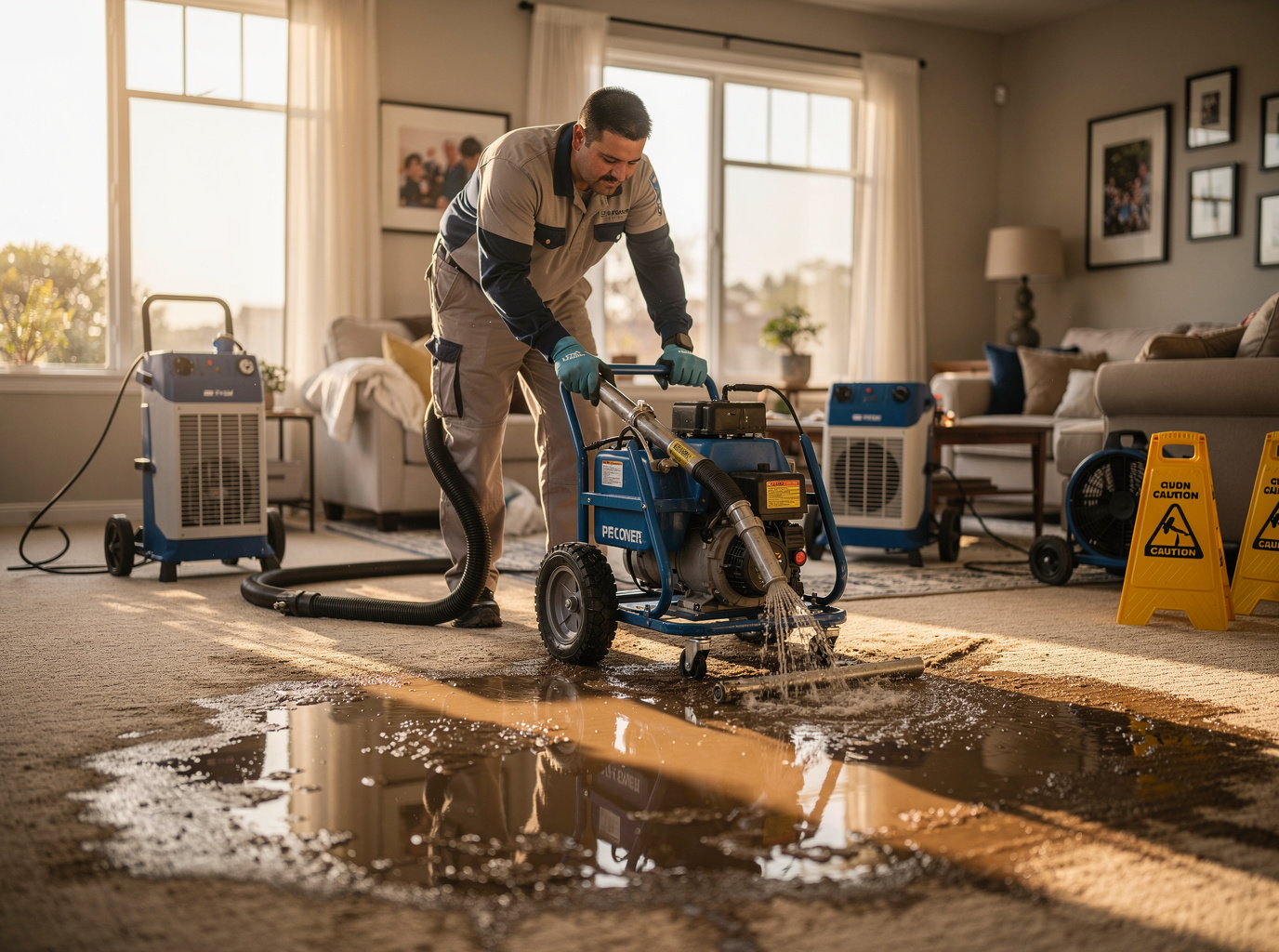
San Diego's mild coastal Mediterranean climate keeps temperatures moderate year-round, yet sudden pipe bursts or appliance failures still create urgent extraction needs in older stucco homes common in North Park and La Mesa. These structures often have slab foundations that trap moisture beneath tile or hardwood, requiring targeted moisture mapping before drying equipment can be placed effectively. Without prompt removal, hidden saturation leads to mold growth within 48 hours even when outdoor humidity stays low.
In neighborhoods like Mission Valley and Pacific Beach, proximity to the coast and seasonal winter rains increase the frequency of roof and window leaks in multi-unit buildings. Technicians must account for shared walls and limited access points when setting up air movers and dehumidifiers to avoid pushing moisture into adjacent units. San Diego County building codes require proper documentation of moisture levels before any reconstruction work begins on affected drywall or flooring.
Downtown San Diego high-rises and La Jolla hillside properties present unique drainage challenges due to terrain and older plumbing systems. Emergency crews often work around limited parking and elevator restrictions while extracting standing water from lower-level garages or utility rooms. Nearby cities such as Chula Vista and Coronado see similar issues from aging infrastructure, where quick containment prevents water from migrating into neighboring properties.
Crew response from the Camino Santa Fe location allows coverage across the county within the service window of Monday through Friday 8am to 6pm and Saturday 9am to 2pm. Every job includes thermal imaging to locate residual moisture behind cabinets or under concrete before equipment removal.
Technician insight
In San Diego, the thing that catches most people out with Emergency Water Damage Restoration is how the mild coastal Mediterranean climate slows visible drying on older stucco homes in North Park and La Mesa while moisture stays trapped under slabs. Homeowners often remove fans too soon because the air feels dry, allowing hidden mold to develop behind baseboards.
Mission Valley Condo Leak
A supply line failure on the second floor sent water through shared walls into the unit below. Inspection revealed saturation in the lower condo’s drywall and under vinyl plank flooring. Extraction and targeted drying prevented spread into the neighboring unit while meeting San Diego County documentation requirements.
Emergency Water Damage Restoration Services We Offer
✓Burst Pipe Water Extraction
Immediate removal of standing water from supply line failures in kitchens and bathrooms common in North Park homes.
✓Sewage Backup Cleanup
Safe extraction and disinfection after main line backups affecting lower levels in Mission Valley apartments.
✓Storm Flood Restoration
Pumping and drying of rainwater intrusion through windows and doors during winter storms in Pacific Beach.
✓Appliance Leak Remediation
Containment and moisture removal from washing machine or water heater failures in La Jolla residences.
✓Roof Leak Water Removal
Ceiling and attic drying after roof penetrations in older Downtown San Diego buildings.
✓Slab Leak Detection and Drying
Non-invasive moisture mapping and targeted drying under concrete slabs in Chula Vista and Coronado homes.
Emergency Water Damage Restoration Cost in San Diego, CA
| Service | Typical Range | What Affects It |
|---|---|---|
| Initial water extraction visit | $450–$950 | Varies with volume and number of rooms |
| Full drying package | $800–$2,200 | Includes equipment for 3–5 days based on material type |
| Slab leak drying add-on | $300–$700 | Extra days required for concrete moisture release |
| Sewage contamination handling | $600–$1,400 | Includes PPE and disposal in regulated county areas |
Ranges are typical for San Diego, CA and confirmed with an exact written quote before any work starts.
How it works
- 1
On-Site Assessment
Technician arrives, documents visible water, and uses moisture meters on affected materials in the specific San Diego neighborhood.
- 2
Water Extraction
Industrial pumps and vacuums remove standing water from floors, carpets, and cavities before secondary damage sets in.
- 3
Drying And Dehumidification
Air movers and dehumidifiers are positioned based on local humidity patterns to reach manufacturer-specified drying goals.
- 4
Final Moisture Verification
Thermal imaging confirms all materials meet dry standards before equipment removal and site walkthrough.
Pricing
Upfront quotes provided after inspection; final cost depends on water volume, affected materials, and access constraints.