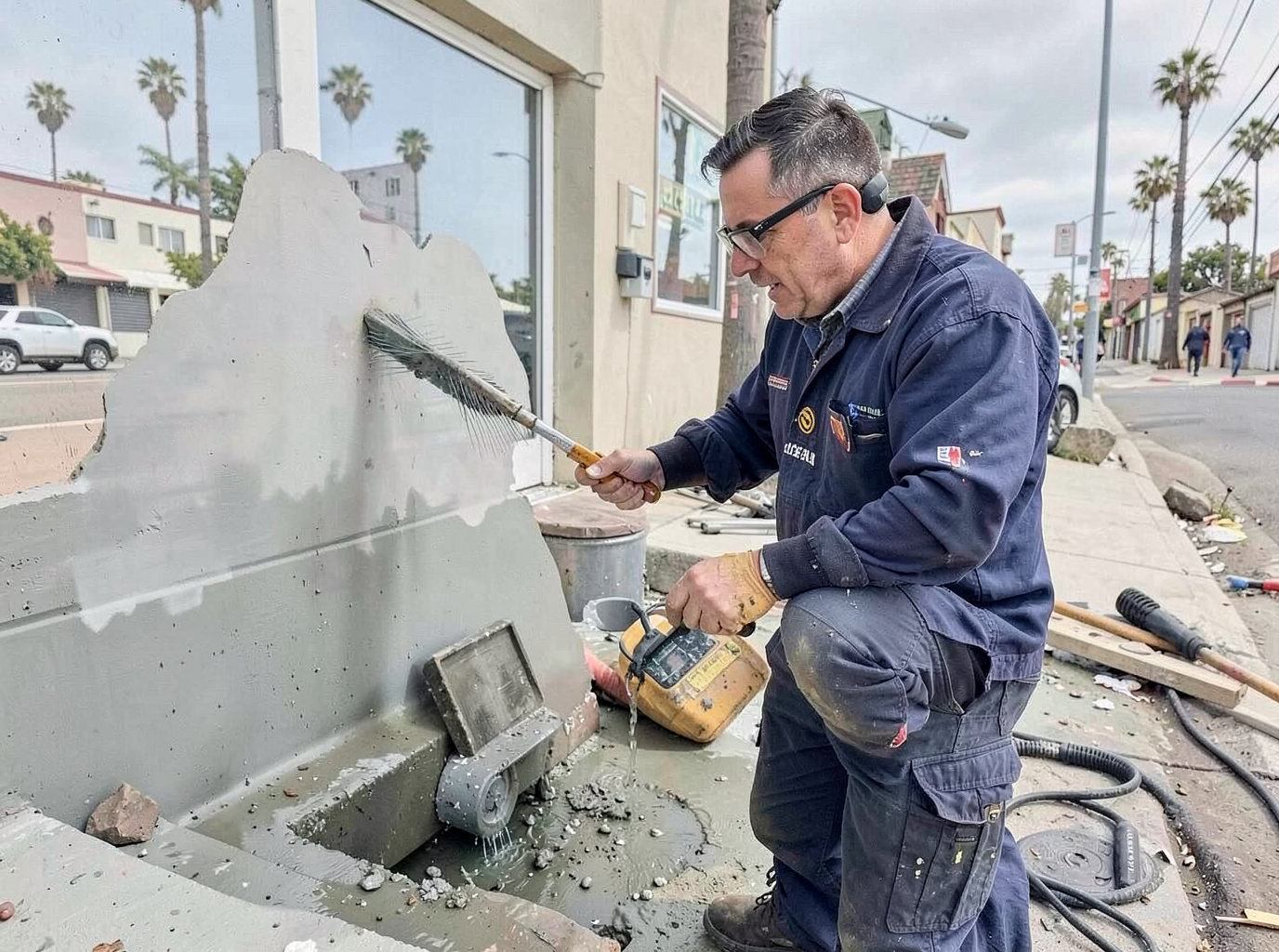
San Diego's mild coastal Mediterranean climate keeps relative humidity elevated most of the year, so even small leaks in North Park bungalows or Mission Valley apartments can drive moisture deep into stucco-clad walls and under slab foundations common in homes built before 1980. Technicians must account for the county's sandy loam soils that allow water to migrate laterally rather than drain straight down, often requiring perimeter excavation checks around properties near Balboa Park or the USS Midway Museum waterfront.
La Jolla's hillside properties and Pacific Beach beachside cottages frequently experience salt-air corrosion on metal lath and fasteners, which accelerates hidden deterioration once water intrusion begins. Repair crews routinely remove saturated drywall up to 18 inches above the visible water line because capillary wicking in gypsum board travels farther in the region's consistent 65-75 degree temperatures than in drier inland counties.
Downtown San Diego high-rises and Coronado peninsula homes built on reclaimed land face unique hydrostatic pressure issues during winter rains, pushing water through elevator pits and underground parking. Restoration work here often includes negative-air containment to protect neighboring units and coordination with building management on shared drainage systems that run beneath La Mesa and Chula Vista streets.
When sewage or Category 3 water affects older North Park duplexes, full removal of affected subflooring is standard because particleboard underlayment used in 1970s construction delaminates quickly and harbors bacteria in the county's mild winters that never fully freeze the ground.
Technician insight
In San Diego, the thing that catches most people out with Water Damage Repair is how the mild coastal Mediterranean climate keeps humidity high enough that incomplete drying under slab foundations common in La Jolla and Mission Valley homes allows mold to appear months later even after surface water is gone.
Hidden Moisture in North Park Bungalow
A kitchen supply line leak had traveled under the slab of a 1960s North Park home. Initial drying stopped at visible wet carpet, but follow-up readings showed elevated moisture in the subfloor extending toward the street. Crews opened the slab edge, extracted trapped water from the sandy loam soil, and installed targeted drying before replacing the flooring and drywall.
Water Damage Repair Services We Offer
✓Emergency Water Extraction
Rapid removal of standing water from slabs and crawl spaces in La Jolla and Pacific Beach homes before it migrates into neighboring units.
✓Structural Drying and Dehumidification
Placement of commercial air movers and dehumidifiers calibrated for San Diego's year-round humidity to dry wall cavities and subfloors without over-drying historic plaster.
✓Drywall and Insulation Replacement
Selective demolition and reinstallation of moisture-damaged drywall and insulation in Mission Valley condos and North Park bungalows, matching original textures.
✓Flooring Repair and Restoration
Salvage or replacement of hardwood, tile and carpet in areas affected by water from Balboa Park vicinity properties and older Downtown buildings.
✓Sewage and Contaminated Water Cleanup
Full containment, removal and disinfection protocols for Category 3 water events common in older sewer lines serving La Mesa and Chula Vista neighborhoods.
✓Post-Flood Restoration
Comprehensive repair after heavy rain events that overwhelm drainage around hillside homes near La Jolla Cove and low-lying areas of Coronado.
Water Damage Repair Cost in San Diego, CA
| Service | Typical Range | What Affects It |
|---|---|---|
| Initial Moisture Assessment | $150–$300 | Varies with multi-story access in Downtown or hillside La Jolla properties |
| Water Extraction | $400–$900 | Higher when Category 3 water or confined spaces in older North Park homes |
| Equipment Drying (per day) | $200–$450 | Extended runs needed in humid coastal zones like Pacific Beach |
| Drywall Removal and Replacement | $800–$2,200 | Depends on linear footage and matching finishes in Mission Valley units |
Ranges are typical for San Diego, CA and confirmed with an exact written quote before any work starts.
How it works
- 1
On-Site Assessment
Technicians inspect affected zones in the specific San Diego neighborhood, document moisture levels in walls and slabs, and identify migration paths created by local soil and construction types.
- 2
Water Removal
Extraction equipment removes standing water while protecting surrounding structures common in dense areas like Downtown San Diego and Pacific Beach.
- 3
Drying and Monitoring
Industrial drying is set up and tracked daily until moisture readings match unaffected materials, accounting for the county's persistent coastal humidity.
- 4
Repair and Restoration
Damaged materials are replaced and finishes restored to match original construction details found in North Park and La Jolla homes.
- 5
Final Verification
Post-repair moisture checks and walkthrough confirm the structure is dry before returning the property to normal use.
Pricing
Costs depend on water category, affected square footage and access challenges typical in San Diego's varied neighborhoods; quotes provided during listed business hours.