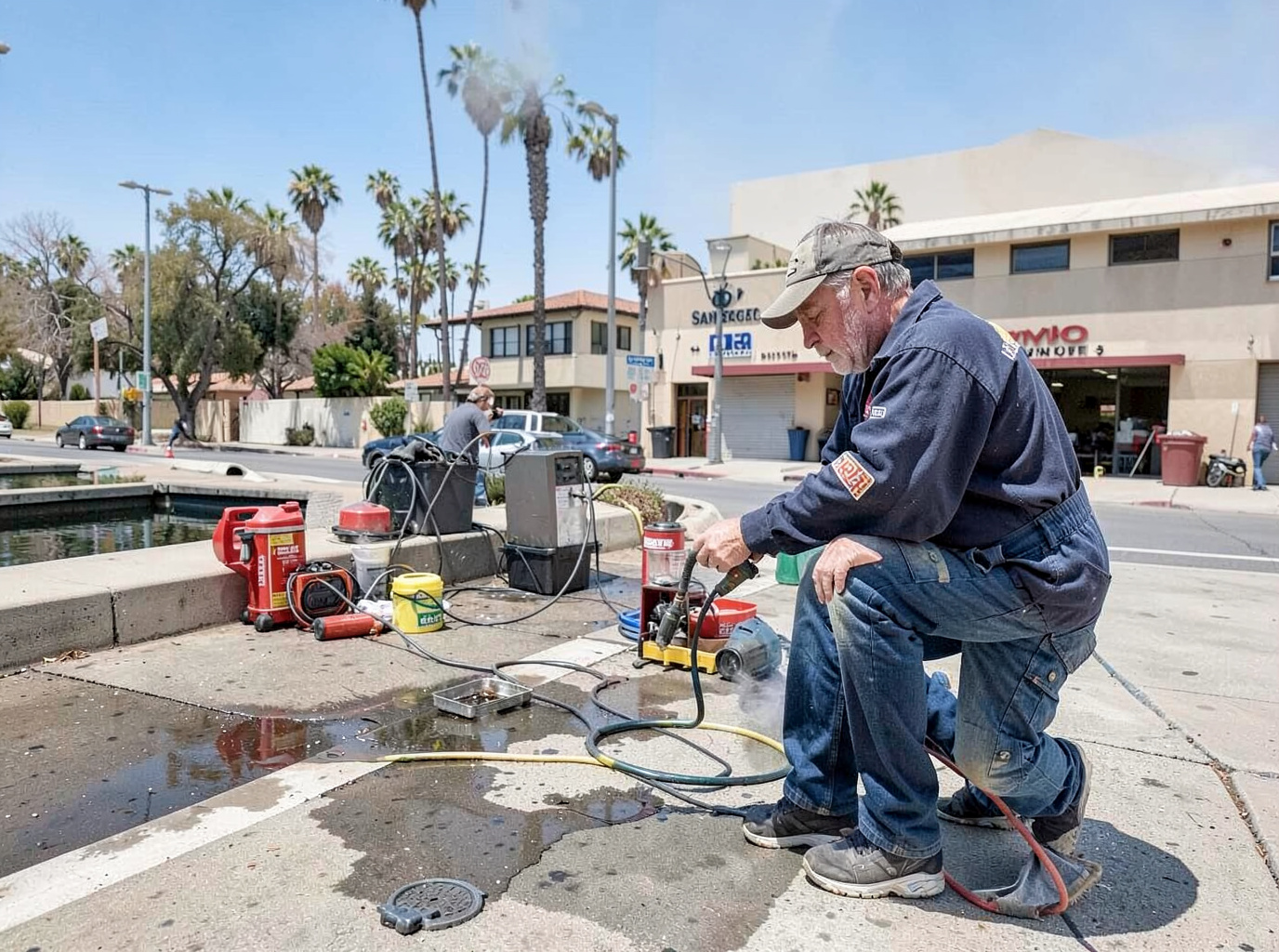
Imperial Beach homes sit right against the Pacific and the Tijuana River estuary, where winter rains and king tides regularly push water into crawl spaces and garages. San Diego Water Damage Restoration reaches these properties from our base at 10320 Camino Santa Fe Ste E to extract standing water, dry saturated drywall, and prevent mold in the salt air. We work on the older single-story bungalows along Palm Avenue and Seacoast Drive as well as the mobile home parks near the estuary that see repeated intrusion from river flows.
Because Imperial Beach sits at the county’s southwest corner, response routes run south on I-5 then west on Palm Avenue or Coronado Avenue. Our crews know which streets flood first when the Tijuana River rises and which alleys stay accessible for equipment trailers. We schedule extraction and drying around the mild coastal weather that still allows high humidity to linger inside structures for days after a storm.
Property owners in Imperial Beach call us for both sudden pipe bursts and slower leaks from roof penetrations common in the older housing stock near the pier. We document moisture levels room by room and return daily until readings return to normal before any reconstruction begins.
Around 13. Imperial Beach
We regularly work near:
- 📍Imperial Beach Pier
- 📍Tijuana River National Estuarine Research Reserve
- 📍Border Field State Park
- 📍Palm Avenue
- 📍Imperial Beach Elementary School
- 📍Ream Field
Water Damage Restoration in 13. Imperial Beach — Local Notes
- •Tijuana River flows after rain events often carry sediment and contaminants that require extra containment steps during extraction near the estuary.
- •Salt air accelerates corrosion on metal HVAC components and electrical boxes in beachfront homes, so we inspect these systems early in every job along Seacoast Drive and adjacent blocks.
- •Many Imperial Beach lots have minimal side-yard access, requiring us to route dehumidifiers and air movers through front doors or garage entries on narrow streets like Palm Avenue.
- •Older crawl spaces under 1950s-1970s homes near the pier frequently lack vapor barriers, allowing groundwater to wick upward after high tides.