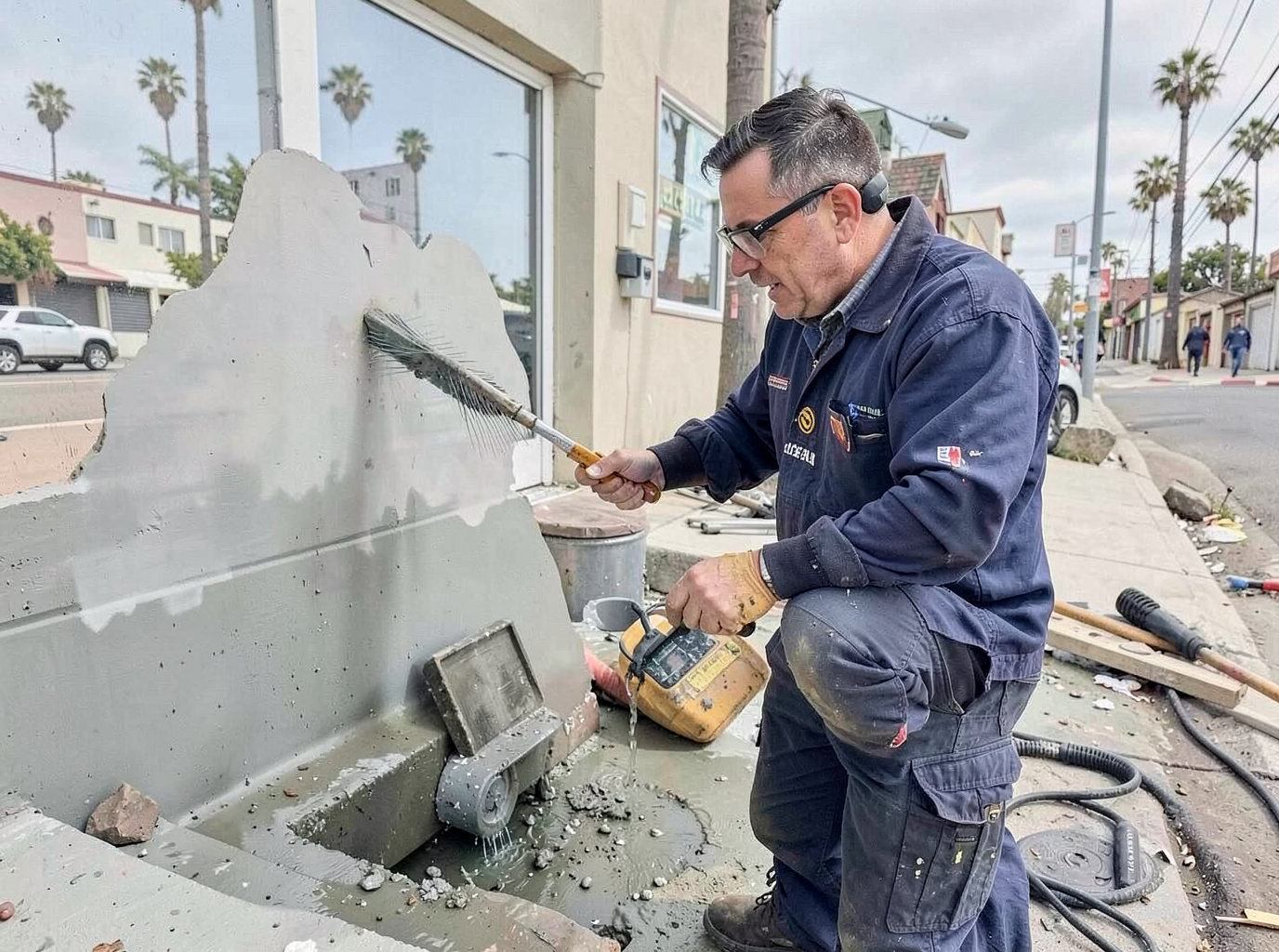
El Cajon sits in a valley east of downtown San Diego where summer heat and occasional winter storms create distinct water intrusion patterns. Homes built in the 1950s through 1970s along streets like Jamacha Road and Magnolia Avenue often have older plumbing and flat roofs that leak when rain hits harder than coastal zones. Our team at 10320 Camino Santa Fe Ste E responds directly to these properties with extraction and drying equipment sized for the tighter lot layouts common here.
Access from our base to El Cajon takes us along Highway 52 or Fletcher Parkway, letting crews reach calls near Parkway Plaza or Wells Park within the hour during business hours. Mon–Fri 8am–6pm and Sat 9am–2pm we handle slab leaks and storm runoff that pools against older foundations in the lower sections of the valley. Local drainage quirks around Greenfield Park and nearby school sites mean we frequently set up containment barriers before starting dehumidification.
Nearby cities like La Mesa and Chula Vista share similar housing stock, but El Cajon’s inland location means faster evaporation once we start drying yet more risk of hidden moisture behind stucco walls after heavy rains.
Around 2. El Cajon
We regularly work near:
- 📍Wells Park
- 📍Parkway Plaza
- 📍El Cajon Boulevard
- 📍Fletcher Parkway
- 📍El Cajon Valley High School
- 📍Magnolia Avenue
Water Damage Restoration in 2. El Cajon — Local Notes
- •Valley terrain funnels runoff toward lower blocks along El Cajon Boulevard, requiring extra perimeter drying on slab homes.
- •1950s–1970s single-story ranch houses dominate, with narrow side yards that limit equipment placement during water damage restoration.
- •Summer heat accelerates mold growth in wall cavities after leaks, so we prioritize rapid moisture mapping near schools like Cajon Valley Middle.
- •Winter storms hit harder here than in Pacific Beach, often overwhelming older gutters on properties around Fletcher Parkway.