2026-11-03 · Alex Rivera
Inspecting for Moisture Damage in Coastal San Diego Properties
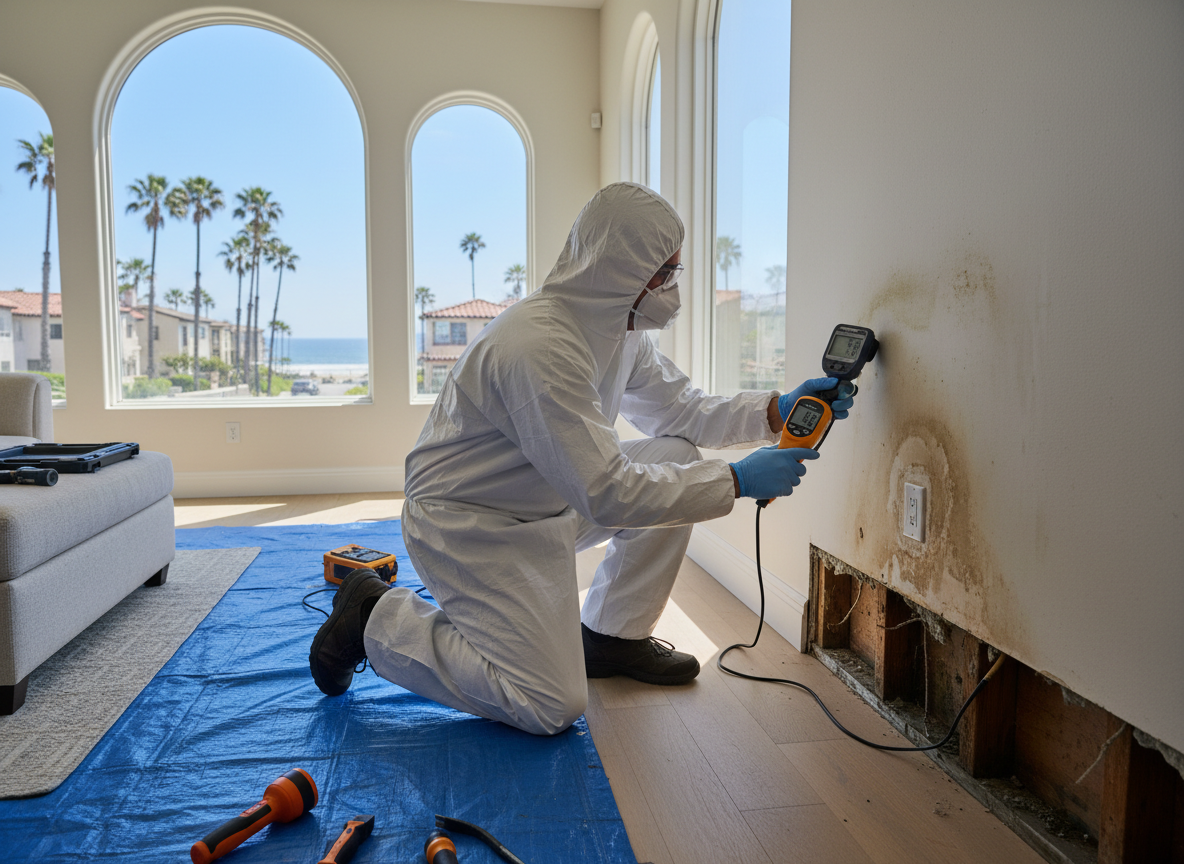
Coastal San Diego properties in neighborhoods like La Jolla, Pacific Beach, and Mission Valley need targeted moisture inspections every 6–12 months because the mild Mediterranean climate keeps relative humidity above 60 percent most of the year, allowing water to penetrate stucco and wood framing without obvious exterior signs.
Common Moisture Entry Points in Coastal Homes
Salt-laden air from the Pacific accelerates corrosion on metal flashing and window frames in homes built before 1980, especially in La Jolla and Downtown San Diego where many structures sit within a half-mile of the shoreline. Roof-to-wall transitions around flat or low-slope roofs common in Mission Valley condos collect wind-driven rain that travels under tile or membrane layers. In Pacific Beach bungalows with raised foundations, vented crawl spaces pull in moist marine air that condenses on cooler subfloor joists during overnight temperature drops of 10–15 degrees. Balboa Park-adjacent properties often have mature landscaping whose irrigation overspray hits stucco walls at ground level, creating a wicking path that travels upward 18–24 inches. These patterns differ from inland areas such as La Mesa or Chula Vista where summer heat dries surfaces faster.
Visual and Tool-Based Inspection Steps
Begin at the exterior by scanning stucco for hairline cracks wider than 1/16 inch, especially within 12 inches of grade or around hose bibs. Inside, use a pin-type moisture meter on baseboards in bathrooms and laundry rooms; readings above 15 percent indicate active intrusion in the mild coastal climate where normal drywall stays below 12 percent. Check attic insulation for dark staining or matted areas near plumbing vents and skylights, common in North Park and La Jolla homes with original 1960s–1970s construction. In crawl spaces, inspect for white efflorescence on concrete piers and musty odors that signal chronic dampness from the marine layer. Document findings with photos and meter readings before any surface is opened, because once drywall or flooring is disturbed the job scope expands quickly.
When Hidden Damage Requires Professional Assessment
If meter readings exceed 20 percent or visible mold covers more than 10 square feet, contact a specialist for Water Damage Restoration rather than attempting DIY drying. Properties near La Jolla Cove or Coronado often have plaster walls that hide moisture behind multiple layers, requiring thermal imaging to locate wet zones without demolition. Winter storm runoff from nearby canyons can back up against foundations in Mission Valley, creating hydrostatic pressure that only becomes apparent weeks later. The article Handling Water Intrusion After San Diego Winter Storms outlines seasonal timing for these checks. Owners in older stock should also review Water Damage Repair options when insulation or subfloors show repeated saturation cycles.
Practical Follow-Up After Initial Findings
Once moisture sources are confirmed, improve ventilation in crawl spaces with sealed vapor barriers and dehumidifiers set to 50 percent relative humidity to match San Diego County’s typical coastal conditions. Schedule follow-up meter checks 30 days after any drying work to verify levels have returned to the 8–12 percent range typical for properly managed coastal homes. Keep records of inspections, especially for properties within service areas that include Coronado and La Mesa, because insurers often request documentation of ongoing maintenance. This systematic approach prevents small coastal moisture issues from turning into full-scale structural repairs.